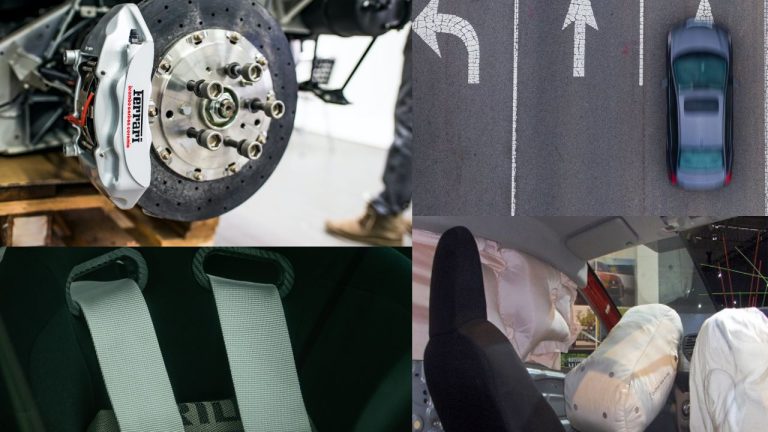
Car safety features include seat belts, airbags, anti-lock braking system (ABS), and traction control for improved safety on the road. In today’s fast-paced world, one of the most important considerations for car buyers is safety.
Seat belts that keep occupants securely in place to airbags that cushion the impact of a collision, these features are designed to protect and minimize injuries. The anti-lock braking system (ABS) prevents the wheels from locking up during sudden braking, increasing control and stability. Traction control enhances grip on the road by reducing wheel spin, particularly in adverse weather conditions.
These safety features are essential for every driver and passenger, promoting safer journeys and giving peace of mind on the road.
Evolution Of Car Safety
Car safety features include airbags, anti-lock braking system (ABS), traction control, electronic stability control (ESC), lane departure warning, and forward collision warning. These features help to protect occupants, reduce the risk of accidents, and improve overall safety on the road.
Car safety features have evolved over time with significant improvements and advancements. Throughout history, various factors have contributed to the progress of these safety measures. The impact of regulations and consumer demands cannot be overstated. Regulations have set standards for safety features in cars, pushing manufacturers to incorporate advanced technologies.
The continuous efforts in improving these features demonstrate the commitment of the automotive industry towards prioritizing safety for everyone on the road.
Here we introduce some most common car safety features
Types of Safety Features in a Car
Safety features in cars are broadly categorized into two main types:
- Active Safety Features
- Passive Safety Features
Here’s a detailed look at both:
Active Safety Features
Active safety features are designed to prevent accidents before they occur. They include various technologies and systems that help the driver maintain control of the vehicle and avoid collisions.
- Anti-lock Braking System (ABS)
- Prevents wheels from locking up during hard braking, maintaining steering control.
- Electronic Stability Control (ESC)
- Helps maintain vehicle control during extreme steering maneuvers by applying brakes to individual wheels.
- Traction Control System (TCS)
- Prevents wheel spin during acceleration by reducing engine power or applying brakes.
- Adaptive Cruise Control (ACC)
- Maintains a set speed and distance from the vehicle ahead, automatically adjusting speed as needed.
- Lane Departure Warning (LDW) and Lane Keeping Assist (LKA)
- Warns the driver if the vehicle unintentionally drifts out of its lane and can provide corrective steering.
- Forward Collision Warning (FCW)
- Alerts the driver to an imminent collision with a vehicle or object ahead.
- Automatic Emergency Braking (AEB)
- Automatically applies the brakes to prevent or mitigate a collision.
- Blind Spot Detection (BSD)
- Warns the driver of vehicles in their blind spots during lane changes.
- Rear Cross Traffic Alert (RCTA)
- Alerts the driver of approaching traffic from the sides when reversing.
- Parking Assist Systems
- Includes sensors and cameras to aid in parking, with some systems capable of automatic parking.
Passive Safety Features
Passive safety features are designed to protect occupants during a collision or minimize injury. These features come into play once an accident has occurred.
- Airbags
- Deploy in the event of a collision to cushion and protect occupants. Includes front, side, curtain, and knee airbags.
- Seatbelts
- Restrain occupants during a crash to prevent them from being thrown forward. Modern systems often include pre-tensioners and load limiters.
- Crumple Zones
- Areas of the vehicle designed to deform and absorb energy during a collision, reducing the force transferred to occupants.
- Safety Cage
- A reinforced structure that protects occupants by maintaining the integrity of the passenger compartment.
- Headrests
- Prevent whiplash injuries by supporting the head during rear-end collisions.
- Side-impact Beams
- Reinforced structures in the doors to protect occupants during side collisions.
- Collapsible Steering Column
- Designed to collapse during a collision to prevent injury to the driver.
- Child Safety Seats and LATCH System
- Secure anchors and tethers for safely installing child safety seats.
- Pedestrian Protection Features
- Includes design elements like active hood systems that reduce injury to pedestrians in the event of a collision.
- Seat Belt Reminder Systems
- Alerts the driver and passengers if seatbelts are not fastened.
Advanced Safety Technologies
These cutting-edge features often integrate both active and passive safety elements, leveraging technology to enhance overall vehicle safety.
- Driver Attention Monitoring
- Detects signs of driver fatigue or distraction and provides alerts to refocus the driver.
- Night Vision Systems
- Uses infrared cameras to detect pedestrians, animals, and obstacles in low-light conditions.
- Automatic High Beams
- Automatically switches between high and low beams based on oncoming traffic.
- Road Sign Recognition
- Identifies and displays road signs such as speed limits and no-entry signs on the dashboard.
- Emergency Call Systems
- Automatically contacts emergency services in the event of a severe accident.
Combining these safety features can significantly reduce the risk of accidents and improve the survivability and injury outcomes in the event of a collision.
Future Innovations In Car Safety
The future of car safety lies in autonomous driving, with its potential to drastically reduce accidents. These self-driving cars are equipped with advanced sensors and artificial intelligence to analyze road conditions and make split-second decisions. Concept cars also present revolutionary safety features, such as airbags placed on the exterior of the vehicle to protect pedestrians.
The emerging technologies in car safety are constantly evolving, with innovations like collision avoidance systems, adaptive cruise control, and lane departure warning systems becoming increasingly common. These technologies aim to prevent accidents, minimize injuries, and save lives on the road.
Along with enhanced safety features, research is also being conducted on energy-absorbing materials and improved vehicle structures to enhance occupant protection. As technology continues to progress, the future of car safety holds great promise in making our roads safer for everyone.
The Role of Car Manufacturers in Safety
Car manufacturers prioritize safety features by conducting extensive research and implementing best practices in design and manufacturing. Safety ratings are significant as they provide consumers with valuable information about a car’s safety performance.
The aim is to create vehicles that offer maximum protection to occupants in the event of an accident. Car manufacturers strive to develop innovative safety technologies, such as advanced driver assistance systems and crash avoidance systems. These features not only protect the driver and passengers but also contribute to reducing the overall number of accidents on the roads.
Importance of Regular Maintenance for Vehicle Safety
Regular maintenance includes tasks such as checking and replacing worn-out parts, inspecting the brakes, tires, and lights, and maintaining proper fluid levels.
These maintenance tasks help in preventing accidents and breakdowns on the road. It is important to educate car owners about the significance of routine upkeep to enhance vehicle safety. By understanding the impact of vehicle maintenance on safety, car owners can prioritize regular check-ups and take necessary action promptly.
Stay proactive and keep your vehicle in optimal condition to reduce the risk of accidents and ensure the safety of yourself and others on the road.
FAQ
Conclusion
The incorporation of advanced technologies like ABS, airbags, stability control, and blind spot detection systems have significantly contributed to the overall safety of vehicles.
The integration of intelligent safety systems such as lane-keeping assist and adaptive cruise control ensure a smooth and secure driving experience.
Car manufacturers continue to innovate and improve safety features, employing cutting-edge technologies to further enhance vehicle safety.